Wedding Guest Outfits from Clothes You Own
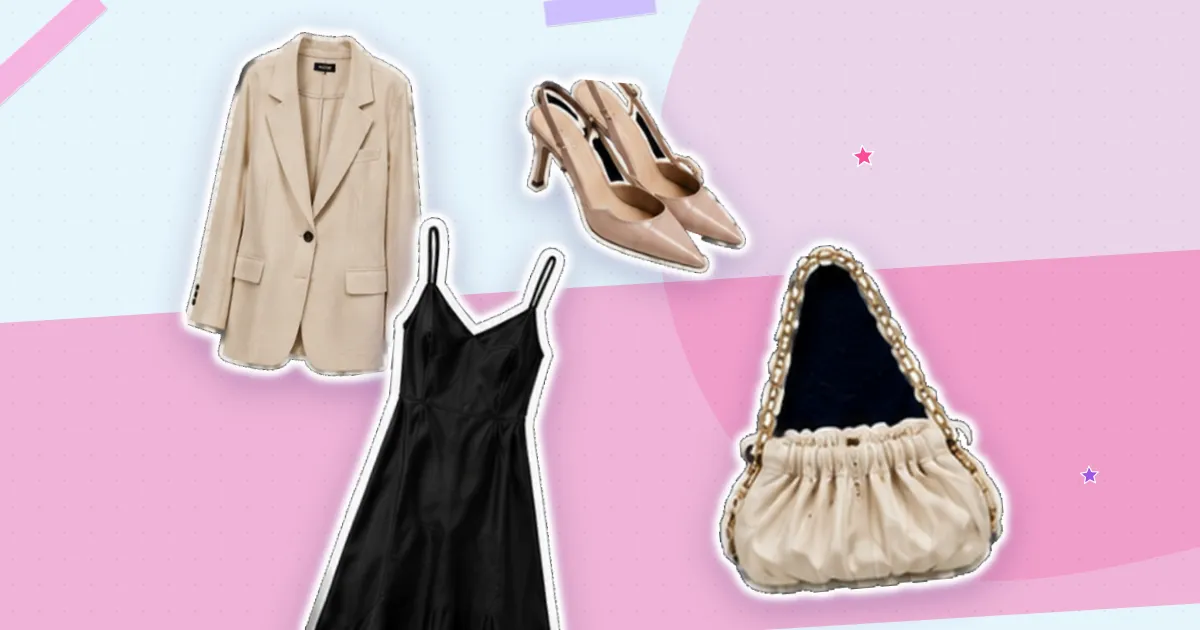
Wedding invitations trigger more unnecessary clothing purchases than any other event, and the resulting outfit is usually worn once. Most wardrobes already contain a workable answer — the obstacle is that occasion dressing feels like it requires something new.
Decode the dress code first
Black tie — floor-length or formal cocktail, dinner jacket. The one code where you genuinely may need to borrow, rent or buy.
Formal or black tie optional — a smart midi or maxi, or a dark suit. Most wardrobes with any formal wear can manage this.
Cocktail — knee to midi length, a suit, or separates that read as dressed up. This is the most common code and the most achievable from an existing wardrobe.
Semi-formal or "smart" — a nice dress or elevated separates. Almost certainly already in your closet.
Garden party, beach, festival — the code is about the setting more than the formality. Footwear matters more than the outfit; heels sink into lawns and sand.
If the invitation does not say, look at the venue and the time. An evening reception in a hotel is dressier than a 1pm registry office, and the couple's own wedding social media usually settles it.
The rules that still apply
- Not white, including ivory, cream and mostly-white patterns. This is the one rule that is still universally observed.
- Check about black if the couple is traditional; at most modern weddings it is completely fine.
- Avoid the bridal party colour if you know it, particularly for group photographs.
- Cover what the venue requires — many places of worship expect shoulders covered, and a wrap solves it.
Look for the dressiest thing you own, then elevate it — rather than looking for something new that is dressy enough.
Building it from what you have
Start from the shoes and work up. Formal footwear is the constraint in most wardrobes, and it determines which outfits are even possible. Then find the dressiest bottom half that works with them, and the top half after that.
Separates are underused for weddings. A silk or satin top with tailored trousers reads as formal as most dresses, and both halves already exist in a lot of wardrobes. A plain midi dress that reads as workwear becomes an evening outfit with different shoes and a jacket removed.
This is exactly the kind of assembly problem a catalogued wardrobe handles well — filter to your formal pieces, see them together, and build combinations without emptying the closet onto the bed.
Elevate rather than replace
Three small additions change an outfit's register more than a new dress, and each is reusable:
- A jacket or wrap that adds structure and solves both cold churches and evening terraces
- One considered accessory — a proper bag, or jewellery that reads as deliberate
- A press. Genuinely. A steamed dress looks twice as expensive as a creased one, and it costs ten minutes.
If you are going to spend, spend on the reusable half. Shoes and a jacket you will wear again beat a dress you will not — the cost per wear argument is unusually clear-cut for occasion wear.
The repeat-wearing question
Photographs are the only real complication, and only for the same circle of people. Different guests, different city, a year later — nobody is checking.
If it does bother you, change the visible half. Same dress with a different jacket and different shoes is functionally a different outfit in photographs. Recording what you wore and to whose wedding takes five seconds and removes the uncertainty entirely.
Practical details people forget
Weddings are long. You will be standing, sitting on grass, dancing and possibly outdoors after dark. Check that you can sit comfortably, walk on the ground surface at the venue, and stay warm at 10pm. A stunning outfit you spend the evening managing is worse than a good one you forget you are wearing.
Closetelle turns your clothes into a digital wardrobe that plans outfits for you.
Download on the App Store