7 Outfit Formulas That Always Work
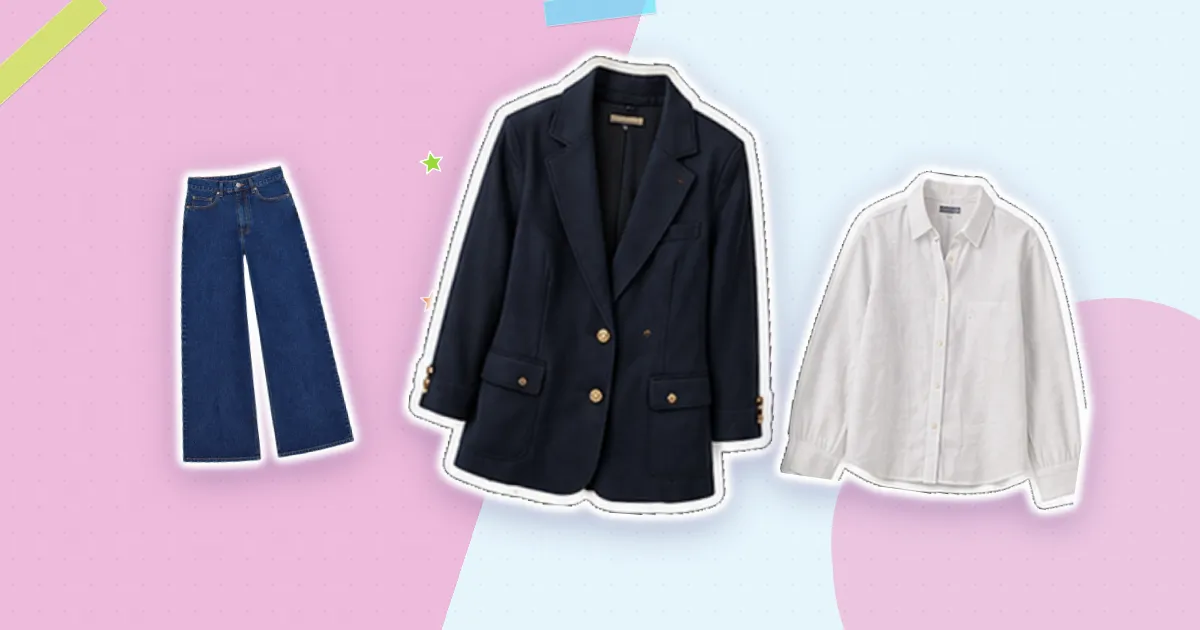
An outfit formula is a structure, not a specific set of clothes. It tells you what roles to fill — fitted on top, loose on the bottom, a third layer, one point of interest — and lets you swap in whatever you own that fits each role.
Learn a handful and getting dressed becomes assembly rather than invention. Here are seven that hold up across wardrobes, seasons and dress codes.
1. Fitted top, loose bottom
A close-fitting top with wide trousers, a full skirt or relaxed jeans. This works because it creates a clear silhouette: the eye reads the waist, and the volume below reads as deliberate rather than accidental.
Tuck the top, or choose one that ends at the hip bone. An untucked fitted top over volume loses the shape that makes the formula work.
2. Loose top, fitted bottom
The inverse, and just as reliable. An oversized shirt or slouchy knit with straight or slim trousers. The volume sits on top, the line stays clean below.
The failure mode is loose on loose, which reads as shapeless. If you want volume in both places — and it can look excellent — you need a defined point somewhere: a belt, a tuck, a cuff, an open layer that creates a vertical line.
3. Two neutrals plus one colour
Build the outfit in your base neutrals, then add exactly one coloured piece. A red cardigan over cream and navy. Tan boots against grey and white.
This is the formula that makes a small wardrobe look considered, and it is the practical reason to settle on base neutrals in the first place. One colour reads as a choice; four read as whatever was clean.
4. The third piece
Top and bottom is an outfit. Top, bottom and a third piece is a look. The third piece is a blazer, cardigan, overshirt, waistcoat, or a bag and shoes doing obvious work together.
This is the highest-leverage habit in the list. The same jeans and t-shirt go from undressed to intentional with a blazer over the top, and it costs nothing but the habit of reaching for one more thing.
If an outfit feels unfinished, it is usually missing a third piece — not a different top.
5. Monochrome with texture
One colour family top to bottom — all cream, all navy, all grey — with different textures doing the work. A ribbed knit with smooth trousers. Denim with wool.
Monochrome is the fastest way to look pulled together, and it is very forgiving of pieces that do not quite match, because slight tonal differences read as intentional depth rather than a clash.
6. High-low
Pair something formal with something casual: a blazer with trainers, a slip dress with a chunky knit, tailored trousers with a t-shirt. The tension is the point, and it stops either half from feeling like a costume.
The rule of thumb is one step, not two. A blazer with trainers works. A ballgown with trainers is a different project.
7. The uniform
Find a combination that works and wear it repeatedly with small variations. Same trousers, same shoes, rotating knit. Same dress, rotating layer.
This is not a failure of imagination — it is what most well-dressed people actually do. A uniform removes the daily decision and guarantees you leave the house in something that works. Vary the colour or the third piece and nobody will register the repetition.
Making formulas work with your clothes
Go through your wardrobe and label pieces by role rather than by name: fitted tops, volume tops, slim bottoms, wide bottoms, third pieces. Most wardrobes are unbalanced in a way that becomes obvious immediately — usually plenty of tops and only one real third piece.
That imbalance is the most useful shopping list you will ever write, and it is more specific than any trend guide. If you keep a catalogue of your clothes, you can sort by role and see the gaps in a few seconds rather than guessing.
Then run the formulas against what you own and save the combinations that work. Planning the night before turns them into something you actually wear rather than something you thought about once.
Adapting a formula to you
Formulas are structures, so they survive translation — but two things change how they land.
Proportion. Where you place the volume and the waist matters more than the specific garments. If a formula feels wrong, the usual culprit is the waist landing somewhere unintended: a top that ends at the widest point, trousers that sit lower than you expect. Try the same formula with the tuck changed before rejecting it.
Climate. The third piece is easy in a cold climate and awkward in a hot one. In heat, the third piece becomes a bag and shoes working together, or an open overshirt in something very light. The structure is the same; the materials change.
None of these formulas is gendered or size-specific. Fitted top with loose bottom, two neutrals plus one colour, and the third piece all work on any body — the variables are which cuts fit you well, which is a separate question from which structure to use.
Building a week from four formulas
A worked example, using one wardrobe and four structures:
- Monday — fitted knit, wide trousers, loafers (fitted top, loose bottom)
- Tuesday — white shirt, straight jeans, blazer, trainers (third piece)
- Wednesday — navy knit, navy trousers, navy coat (monochrome with texture)
- Thursday — oversized shirt, slim trousers, flats (loose top, fitted bottom)
- Friday — the uniform: whatever combination you know works
Five days, four structures, and the same dozen pieces throughout. The repetition is invisible because the shapes differ.
When a formula does not work
Three usual causes, in order of likelihood:
The colours are fighting. The structure is right but the palette is not. Two neutrals plus one accent almost always rescues it — the palette is doing more work than the formula.
Everything is the same weight. Three heavy or three flimsy pieces read as flat. Contrast in texture is what makes a simple outfit look considered.
Nothing is fitted anywhere. Volume on volume needs one defined point — a belt, a tuck, a cuff, an open layer creating a vertical line. Without it, the outfit reads as shapeless rather than relaxed.
Using formulas with trends
Trends are easiest to absorb as the accent rather than the structure. Keep the formula stable and let the trending item be the one coloured or statement piece in it. When the trend passes, the formula is unaffected and you have lost one item rather than an outfit.
This is also the cheapest way to try something new: one piece against a base you already trust, rather than a whole look you have never worn.
Common questions
What is an outfit formula?
A structure rather than a specific set of clothes — for example fitted top with loose bottom, or two neutrals plus one colour. It tells you what role each piece plays, so you can fill the roles from whatever you own.
How many outfit formulas do I need?
Three or four covers most weeks. Using several different structures is what makes repeating the same garments invisible, because the silhouettes differ even when the clothes do not.
What is the third piece rule?
Top and bottom is an outfit; adding a third piece — a blazer, cardigan, overshirt, or shoes and bag working obviously together — makes it look considered. It is the highest-leverage habit in outfit building and costs nothing but remembering to reach for one more thing.
Do outfit formulas work for every body type?
Yes — the structures are not size or gender specific. What changes is which cuts fit you well and where you place the waist and the volume, which is a separate question from which structure you are using.
How do I stop wearing the same outfit every day?
Rotate structures rather than garments. The same twelve pieces arranged with four different formulas across a week reads as five different outfits, because the shape changes even when the clothes repeat.
Closetelle turns your clothes into a digital wardrobe that plans outfits for you.
Download on the App Store